

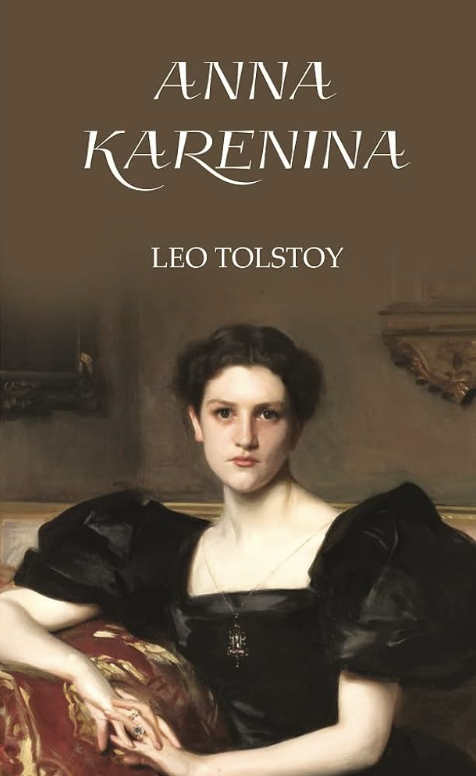
“Respect was invented to cover the empty place where love should be.” (Leo Tolstoy, Anna Karenina)
Summary:
This piece of classic literature follows a tumultuous affair that took place in 1870s Russia and all of the lives and relationships that the affair affects. A member of Moscow’s high society, the protagonist, Anna, develops an affection for a wealthy Russian army officer, known as Count Vronsky. As Anna steps over the boundaries of her marital confines and Vronsky severs his public compassion for Princess Kitty, Anna’s dear cousin, the two position themselves further and further from social acceptance, paying little mind to the lives that their intimacy is upheaving. Such a changed course of life is that of Konstantin Levin, a landowner in the more rural reaches of Russia, who has been rejected by Kitty on the unspoken grounds that she was involved more deeply with Vronsky. The vicissitudes brought forth by the affair ignite new relationships, perspectives, and outcomes written in an ominous, physiological, and above all, enchanting manner that is classically Tolstoyian.
Review:
Anna Karenina has the kind of literary layers that one must be fully committed to familiarizing oneself with in order to connect with the characters and the story itself. Like much classic Russian literature, it can be daunting to dive into. I believe one of the most technically challenging parts of reading this book is becoming acquainted with the names of the characters; as was the lingo of formal society at the time, each character is referred to with at least two different titles (titles filled with consonants that sound very similar at that).
However, once familiarized with the lengthy sentences and religious, philosophical, and social references, Tolstoy’s passion for creating intense, complex, and uniquely troubled characters is vibrant. Each figure in Anna Karenina has many faults and many notions that plague their foresight, and each figure copes with them differently. This diversity in both creating and facing challenges across the characters makes a captivating experience more accessible. For example, while Levin immersed himself in bettering his agricultural pursuits when his marital hopes were snuffed out, purposely avoiding reflections on rejection, Kitty chose to consider her position and spent much time pondering over the way she felt and how she would move forward in finding love.
What stands out to me most about this book is how open it is to interpretation. I noticed quickly in descriptions of Anna and her husband after the adulterous activity that neither had the narrative on their side. Both put forth coherent and obviously non-rational sentiments and conclusions in reflecting on their immediate situation and their position in society. I believe that Tolstoy intended to favor neither husband nor wife to leave the interpretation of who is in the right entirely to the audience.
This theme of invitational commentary is evident in all of the characters; each has very redeemable qualities, but also those that make one question each character’s moral ethics. I think this makes discussion of the novel very enjoyable, as preferences will rely on the reader’s priorities of virtue.
Overall, I really enjoyed this novel, and love that one can take many philosophical reflections away from it. I do think that one must be committed to working through longer paragraphs and more obscure paths of thought to build a real relationship with the characters, interactions, and moral developments in the book, of which there are abundant numbers.
I would give this book: 📚📚📚📚📚- an enjoyable, must-read classic.
Love, Frances
GFB Ambassador