

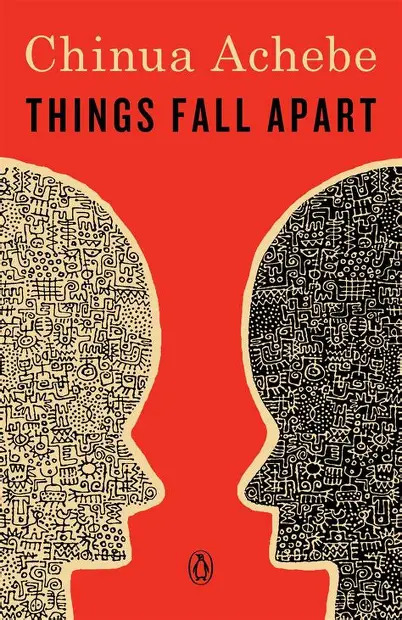
Chinua Achebe’s Things Fall Apart is a historical fiction in which we get to experience an African tribe’s culture, and also its downfall once Christianity took over the continent. I was drawn into the story by the beginning scene, where the main character, Okonkwo, whose life in the Igbo tribe is the focus of the story, “had brought honor to his village by throwing Amalinze the Cat…the great wrestler who for seven years was unbeaten”. As someone who is not usually drawn to historical fiction novels, I would say this story is truly something for all readers to enjoy.
Synopsis:
In this story, we read about Okonkwo and his village, getting to know the culture to then truly understand the impact of the Christians on African culture in the 18-1900s. We first learn about how Okonkwo rose up from poverty to become the great man that he is, despite the failures of his father. Then, after another village kills one of his own, Okonkwo must take in a young lad named Ikemefuna as compensation for those killed in his village. Ikemefuna becomes a part of his family, and we learn about Igbo culture and religion both within a traditional family and the village as a whole as they have weddings, funerals, and disputes. Slowly, Okonkwo and those around him start hearing of other villages being attacked and overrun with Christians trying to spread the word of their God, but not being met well by the people. Okonkwo and his village do not expect this to happen to them, but eventually the Christians arrive at their home too. At first, they come peacefully, only infringing upon trivial traditions. But, once they truly start ridding Okonkwo’s village of everything they stand for, he watches as no one fights back, and we experience the loss of a wonderful culture.
Review:
Chinua Achebe’s writing style is descriptive when telling of ceremonies of the Igbo tribe, truly getting the reader to understand the complexities of the Igbo culture. It is also fast-paced, spanning around 30 years in only around 200 pages, which is vital to understanding how long this culture stood before the invasion of Christianity without feeling wordy and hard to read. Achebe uses lots of imagery throughout the book which helps visualize how things were in the 1800s, but can feel discursive at times if you are not looking closely and analyzing the book.
Okonkwo, the main character, is a strict and gruff man, who is not great with feelings and is quick to deal with situations using aggression. He is not always relatable, but his strong characterization helps to show how even the strongest men fell to the invasion. Ikemefuna, a boy from another village that Okonkwo takes in, is kind-hearted and nostalgic, taking care of all of Okonkwo’s young children and telling Igbo legends. Okonkwo’s youngest daughter, Ezinma, is resilient and strong, so Okonkwo often wishes she was his son, showing his adherence to gender roles. Okonkwo’s first son, Nwoye, was never strong and was often ridiculed by his father for his “lady-like” personality, arising from Okonkwo’s hate of his own father’s weaknesses.
A very prevalent theme in Things Fall Apart is fear. Not only do we see it when the village is invaded by a new religion, but also in Okonkwo. His biggest fear is becoming a failure like his father was, and almost all his rash actions are done to prevent it happening. Change is also a big theme throughout the book. The tribe is very traditional and not willing to change, especially regarding gender roles within the household. It also comes up in the end, when the Christian missionaries try to change up the villages to fit their own ideals of order.
The structure of the story is well paced, occasionally jumping to the past to explain Okonkwo’s father, Unoka, and how he failed his family. There are occasional time jumps of a few years, especially near the end of the book, to get to the time in which missionaries arrive in the Igbo tribe. This only occurs in part 3 of the book, and occurred in the span of around 30 pages, which I personally wish had been longer to see more of the fall of the village, especially since Chinua Achebe spent around 160 pages describing the culture to the reader through Okonkwo’s life.
There are, of course, parts of the book that I did not personally enjoy, like the minimal amount of time the author spent describing the fall of Okokwo’s tribe and culture. But, as an avid reader, when I do not enjoy something about a book I try to understand why the author did it. I believe Chinua Achebe paced the book in this way so we readers can understand how the villagers felt as they lost their entire way of life, so suddenly and confusingly. Regardless of his emphasis on the Igbo tribe’s vanquishing, Achebe created a wonderful depiction of this tribe’s loss of self.
Overall, I would give this book 📚📚📚📚📚, my absolute favorite historical fiction novel! I would recommend it to anyone, regardless of whether or not it’s usually your preferred genre. I’d especially recommend it to anyone looking to learn something new about a little-known section of our world’s history! (5/5)
Love, Bruna
GFB Ambassador