

“If some of us are prepared to sacrifice much in life in order to pursue such aspirations, surely that in itself, whatever the outcome, is cause for pride and contentment” (Ishiguro, 244)
Synopsis:
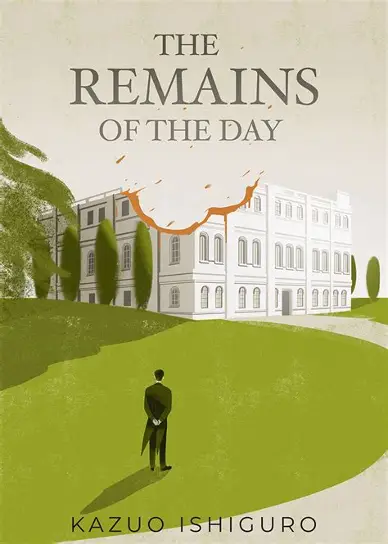
The Remains of the Day is written from the perspective of a butler serving aristocracy in the English countryside during the interwar period. Our storyteller, Mr. Stevens, has held his occupation for decades, and though as he narrates he works for an American gentleman, he had previously, and for most of his working life, dedicated his position to the namesake of the estate where the story is set, Lord Darlington. Stevens is allowed a few day’s break, and though his primary goal is to make contact with a past acquaintance he’d known during his time serving Lord Darlington, the drive through the countryside and encounters along the way spark reflections that make up the majority of the novel. He considers what ‘greatness’ means when applied to his occupation, examines whether through his service thus far he has earned the right to claim that quality as his, and lastly, he reflects on the reputation of the man he dedicated much of his life to and how the validity of it potentially changes his moral standing.
Review:
I’m very grateful that I was recommended to read this book. I’ve read many books set in the English countryside but I believe this one outshines the others tremendously in capturing this area’s beauty, of which in reality I am extremely fond of! The writing itself is beautiful, also, but to me Ishigiro barely pulls off the lengthiness of the syntax. It shows he is talented enough to fit so many words (and not all necessary words) into his sentences without his readers losing sight of the direction they’re going in. I think this type of writing is perfect for the voice of a butler so dedicated to keeping in robust health a world of glamour and (what most would consider) pretentiousness that was rapidly fading – it wasn’t difficult for me to pick up on the sense of desperation to hang on to this world that fueled Steven’s fervent loyalty to his position and master.
This loyalty plays a large role in Stevens’ contemplations: though he explores thoroughly the reasons others would criticize his eternal fidelity – relating to the company Lord Darlington kept and the role he played in their projects – he never questions his choice to remain so dedicated. The loyalty he ponders is one of the traits that goes into his overarching contemplation in the book – what it means to achieve the status of greatness as a butler.
It is in explaining to us why he feels he owns this quality that Stevens takes us back through his memorable moments of service, his considerations of other notable butlers, and woven through these reflections is another theme of this greatness: dignity.
I believe that the book is all the more fun for including these specific words because it invites us to dismantle our views on the words and their meanings; the only way to follow Steven’s story is through getting to know his perspective on what they mean. This is remarkable to me because I see it as a method Ishiguro uses to create proximity between the writer and first-person protagonist.
The author also fosters this connection in a more tangible way – Stevens often references the reader directly. The narrator addresses us as though we are on his side of some curtain between the past and present, and almost assertively presumes his story is keeping us most engaged. I think it’s fun! It allows us to feel the humanity of his presence – whereas many external characters in his story felt the extent of his formality turned him lifeless and cold – void of that humanity.
All in all, a beautiful, sophisticated read that is simultaneously a book to calm down with and an exciting page-turner. It contains fun, rich personalities, descriptions, and interactions that spark lots of introspective contemplation.
I’d give this book 📚📚📚📚📚(5/5)
Love, Frances
GFB Ambassador