

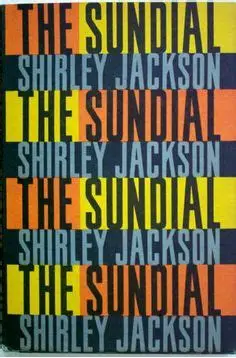
The Sundial by Shirley Jackson marks a chilling detour into psychological suspense wrapped in dark social satire, immediately pulling me into a world of paranoia, prophecy, and buried family tension. As someone drawn to Jackson’s unsettling command of atmosphere, I was curious to see how she’d handle an apocalypse story confined almost entirely to one crumbling house. With her sharp, darkly witty prose and unforgettable cast of self-deceiving characters, she delivers a novel that feels both absurd and deeply disturbing.
Synopsis:
Set within the crumbling halls of the Halloran mansion, the story follows the eccentric Halloran family after young Fancy claims she has received a prophetic message: the world is about to end, and only those within the house will survive. As the family prepares for the apocalypse, paranoia, manipulation, and buried tensions rise to the surface. Orianna Halloran presides over the household with cold authority, using the prophecy to reinforce her control, while the rest of the family reacts in wildly different ways—some with religious fervor, others with opportunistic ambition. What begins as an absurd premise slowly unfolds into something far more unsettling.
Review:
Jackson’s prose is sharp, controlled, and often darkly funny, blending biting dialogue with an atmosphere that grows more claustrophobic by the page. Her writing has always excelled at making the mundane feel menacing, and in The Sundial it feels perfectly calibrated to a story about people slowly losing their grip on reality.
Orianna Halloran is a fascinating, unsettling presence—less a protagonist than a study in control, using the supposed end of the world to cement her dominance over everyone around her. The children, especially Fancy, blur the line between innocence and manipulation, which kept me constantly questioning what was real and who was truly driving events. The Hallorans’ barricading themselves inside the mansion, convinced of their chosen status, becomes increasingly irrational and self-serving, and watching that unravel is where the novel finds its darkest humor.
Themes of power, belief, and self-deception run deep in this book. Jackson explores how easily people construct their own realities when fear takes hold, and how a prophecy—true or not—can become a tool for control rather than salvation. The outside world remains almost abstract throughout; the focus stays tightly confined to the house, amplifying the tension and making every whispered conversation feel loaded with consequence.
The novel doesn’t depict catastrophe through action so much as through anticipation—Jackson is far more interested in how the expectation of disaster reshapes human behavior than in disaster itself. If there’s a weakness, it’s that some secondary Hallorans feel more like functions of the satire than fully fleshed individuals, and readers hoping for a traditional apocalyptic plot may find the lack of external stakes frustrating. But for readers drawn to slow-burn psychological tension, this restraint is exactly the point.
Overall: The Sundial is a chilling, darkly comic study of power, belief, and self-deception rather than a traditional apocalyptic novel. With its claustrophobic setting, biting social commentary, and characters who build their own reality out of fear, Jackson never gives easy answers—leaving readers to decide whether the prophecy matters at all, or if the family’s response to it was the real story all along.
I’d rate it 📚📚📚📚📚 — an eerie, unforgettable, and thought-provoking read. (5/5).
Love, Victoria
GFB Ambassador